
CNC Machining Aluminum: A Comprehensive Guide
Aluminium is a popular material choice for CNC machining applications due to its favorable physical qualities. It is strong, making it suitable for mechanical parts, and its oxidized outer layer resists corrosion caused by the elements. These advantages have made aluminum parts popular in various industries, especially in the aerospace, automotive, healthcare, and consumer electronics industries.
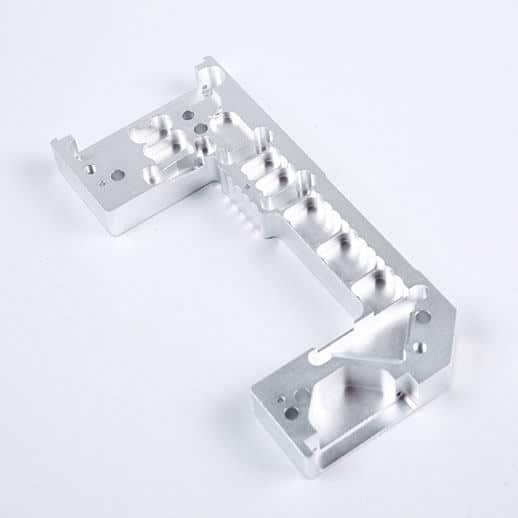
This article outlines some of the primary benefits of aluminum CNC machining and why it is one of the most popular rapid prototyping and production processes.
Why Aluminum in CNC Machining
Aluminium CNC machining has several advantages as below over other metals.
Corrosion Resistance
Aluminum has a strong corrosion resistance, which offers protection against chemical wear and oxidization. 6061 is one of the most corrosion-resistant grades, and it is used in various applications to guard against corrosive environments.
Recyclability
Aluminum is highly recyclable, making it ideal for firms looking to decrease their environmental impact or minimize material waste while saving money. Because of the potentially huge amounts of waste generated by these operations while cutting workpieces, CNC machining applications frequently use recyclable materials.
Strength-to-Weight Ratio
Aluminum is used in many parts because of its great physical features, such as its lightweight yet high-strength nature. Aluminum’s qualities make it excellent for the production of crucial parts in a variety of industries, including automotive and aerospace. Automotive shafts and aviation fittings are two examples of parts that rely on CNC-machined aluminum.
It’s crucial to understand that different types of aluminum serve different purposes. A general-purpose grade, such as 6061, has a high strength-to-weight ratio that is compatible with a wide range of parts. Meanwhile, maritime and aeronautical applications may require stronger aluminum like grade 7075.
Electrical Conductivity
Because of aluminum’s excellent conductivity, CNC-machined aluminum is frequently used in electrical components. While not nearly as conductive as copper, pure aluminum can conduct around 37.7 million Siemens per meter at room temperature of around 20°C. Certain alloys may have lower conductivity, but aluminum is generally more conductive than stainless steel and other metals.
Machinability
Engineers usually prefer aluminum to other metals due to its machinability. Because this metal is easy to form and chip, it can be correctly and efficiently cut using CNC machining machines. This high level of machinability decreases the machining job’s timeframe, making the procedure considerably more economical. Furthermore, aluminum’s machinability reduces the possibility of component deformation when cutting the workpiece, resulting in greater precision, accuracy, and repeatability.
Popular Aluminum Alloys for CNC Machining
Here are some of the popular aluminum alloys available for CNC machining, including their pros and cons:
Aluminum 1050
1050 aluminum is a commercially pure aluminum alloy with excellent corrosion resistance and high electrical conductivity. It is soft and highly ductile, making it easy to form and machine. However, it has lower mechanical strength compared to other alloys.
Pros
- Excellent corrosion resistance
- High electrical and thermal conductivity
- Good for forming and anodizing
Cons
- Low strength and hardness
- Not suitable for high-stress applications
Aluminum 2014
2014 aluminum is a high-strength alloy known for its excellent machinability and fatigue resistance. It is widely used in aerospace and structural applications. Copper, as its primary alloying element, enhances strength but reduces corrosion resistance.
Pros
- High strength and fatigue resistance
- Excellent machinability
- Good for structural applications
Cons
- Poor corrosion resistance
- Limited weldability
Aluminum 3003
3003 aluminum is an alloy with manganese as its main component, improving its strength and corrosion resistance. It is commonly used for roofing sheets, fuel tanks, and cooking utensils due to its excellent workability.
Pros
- Superior corrosion resistance
- Easily weldable and formable
- Cost-effective
Cons
- Lower strength compared to other alloys
- Not heat treatable
Aluminum 5056
5056 aluminum is a magnesium-based alloy known for its high corrosion resistance, especially in marine environments. It is commonly used in rivets, wire screens, and automotive components.
Pros
- Excellent corrosion resistance, especially against saltwater
- High strength and good machinability
- Good wear resistance
Cons
- Not heat treatable
- Difficult to weld
Aluminum 6060
6060 aluminum is a medium-strength alloy with excellent corrosion resistance and good weldability. It is widely used in architectural and structural applications.
Pros
- Good strength-to-weight ratio
- High corrosion resistance
- Good for extrusion and welding
Cons
- Slightly lower strength than 6061
- Not suitable for high-load applications
Aluminum 7075
7075 aluminum is one of the strongest aluminum alloys, commonly used in aerospace, automotive, and military applications. Zinc, as Its primary alloying element, enhances its strength and hardness.
Pros
- Extremely high strength and hardness
- Good fatigue resistance
- Lightweight with excellent mechanical properties
Cons
- Poor corrosion resistance
- Difficult to weld
Aluminium CNC Machining Processes
There are a variety of CNC machining technologies available today for machining aluminum. The following are some of these processes:
CNC Milling
CNC milling aluminum processes are the most widely used in machining CNC aluminum parts. A multi-point cutting rotates along its axis to remove materials while the workpiece either remains stationary or rotates along its axis. This motion can be performed along many axes.
This CNC process is ideal for machining complex aluminum components, including housings, brackets, etc.
CNC Turning
The workpiece rotates in custom CNC turning operations, but the single-point cutting tool remains stationary along its axis during material removal. It is best suited for cylindrical parts such as shafts, bushings, and rings.
CNC Drilling
CNC Drilling is the process of creating a hole in a workpiece. A multi-point rotating cutting tool of a specific size goes in a straight line perpendicular to the drilled surface, effectively making a hole. This CNC process is used to create precise holes in aluminum parts, such as plates, blocks, and aerospace components.
CNC Routing
CNC routing is perfect for cutting and shaping thin aluminum sheets, panels, and intricate 2D/3D profiles. CNC routers use high-speed rotating cutting tools to create precise cuts, making them ideal for lightweight structural components and decorative elements.
Steps To Improve Dimensional Stability In CNC Aluminum
These are the steps to follow to boost dimensional stability in CNC aluminum:
Optimize the Workholding Procedure
It’s a must to fix the workpiece firmly to stop moving and vibrating during machining. Well-designed fixtures offer sufficient clamping force and support, improving stability and precision, especially for intricate or thin-walled components. If a three-jaw self-centering chuck or spring chuck is used to clamp thin-walled CNC machined bushing component radially, the workpiece will surely distort once released after machining. Consequently, an axial end face compression method with high stiffness is preferred.
A threaded mandrel can be put into the part’s inner hole for position based on the inner hole of the part. For processing accuracy, avoid loosening and deformation during processing the outer circle, It’s a must to tighten backward the nut, press the end face, and cover the plate firmly.
Use the Right Method of Operation
Select the appropriate cutting depth, spindle speed, and feed rate;
Focused machining hinders heat dissipation, It’s suggested using symmetrical machining techniques on both sides of the components.
To apply uniform force on the part and minimize deformation, a layered multiple aluminum machining technique is used for all of the workpiece’s cavities.
However, drill before an aluminum milling machine when machining deep-cavity parts to prevent inadequate chip removal, which leads to chipping, tool damage, and workpiece overheating.
Improve Tool Structure
With great plasticity, aluminum is prone to endure substantial deformations during processing, It’s critical to reduce the number of milling cutter teeth during aluminum machining.
Aluminum chips are sticky and can interfere with the manufacture of delicate items with needed tolerances. Increased gap between cutting edges allows larger chips to escape.
To mill the cutting edge, keep the roughness below 0.4 µm and use appropriate grinding processes. This will eliminate any unwanted burrs, resulting in reduced heat dissipation and cutting distortion.
Cutting tool replacement or refurbishing should follow established criteria. As a result, when the surface roughness surpasses 0.2 mm and the cutting temperature exceeds 100 degrees Celsius, it’s necessary to change or replenish the tool.
Reduce Internal Stresses In the Metal Piece
Aluminium stock material may have internal tensions, and induce deformation during machining. Pre-treating the material with stress-relieving techniques like as annealing or thermal stabilization helps to reduce residual tensions and increase dimensional stability. Natural or artificial aging and vibration treatment are standard methods for removing internal stress from aluminium parts.
Natural aging exposes a workpiece to natural circumstances, such as the outdoors, in order to naturally release the workpiece’s internal stress, ultimately eliminating or lowering residual stress. Artificial aging is a man-made procedure that often involves heating or freezing to eliminate or reduce micro-stress and machining residual tension in the workpiece after quenching to prevent distortion and breaking.
The vibration stress relief method uses a portable powerful vibrator to make the aluminum alloy structure vibrate. Plastic deformation reduces and redistributes the internal stress. For aluminum alloy, it is suggested to use the vibration stress relief method within 0–2 hours after quenching, and it can reduce the residual stress by 50%–70%.
Common Problems In Aluminum Alloy Machining
There are some common problems to watch out for during CNC aluminum machining, and they include:
Surface Treatment Problems
Surface treatment improves the look, corrosion resistance, and wear resistance of aluminum alloy parts. However, it comes with drawbacks such as poor coating adherence. If the aluminum alloy’s surface is not clean enough for preparation, coatings such as paint or plating may fail to adhere, resulting in peeling, blistering, or flaking over time. This is not just an aesthetic concern, but it may jeopardize the coating’s protective function.
Anodizing, a popular surface treatment process for aluminum alloys, can also provide challenges. Achieving a stable and homogeneous anodic oxide film thickness can be challenging. Variations in film thickness can cause changes in colour, corrosion resistance, and electrical insulating qualities. To achieve a high-quality anodic coating, variables such as electrolyte composition, current density, and treatment time must be carefully managed.
Tool Wear and Breakage
Although aluminum alloys are generally considered easy to machine, improper cutting conditions can lead to excessive tool wear and breakage. Aluminum’s high thermal conductivity means that heat is rapidly transferred away from the cutting zone, causing thermal expansion and damage to the tool. To extend tool life, machinists should use carbide or diamond-coated tools designed to withstand high cutting speeds. Optimizing feed rates and reducing depth of cut can also minimize unnecessary tool stress and improve machining performance.
Workpiece Deformation
Thin aluminum parts are particularly susceptible to deformation due to internal stresses and excessive heat generation during machining. When too much heat is introduced into the material, it can expand unevenly, causing warping or bending of the final part. To prevent this, proper workholding techniques should be used to support the workpiece securely while minimizing unnecessary clamping force that could induce stress. Additionally, using sharp cutting tools and applying an adequate amount of coolant can help dissipate heat and maintain the dimensional stability of the part.
Chip Welding and Adhesion
Aluminum produces long, stringy chips, which can weld onto the cutting tool and interfere with the machining process. This adhesion issue can lead to inconsistent cutting, increased tool wear, and potential damage to the workpiece. To reduce chip welding, it is important to use coolant or lubrication to create a barrier between the tool and the aluminum surface. Selecting the right tool coating, such as titanium nitride (TiN) or titanium diboride (TiB2), can reduce chip adhesion and improve overall machining efficiency.
Overcoming Challenges in CNC Machining Aluminum
Despite the challenges during aluminum CNC machining, there are still some ways to overcome these challenges. They include:
Optimising Surface Treatment
To improve surface treatment results, good surface preparation is primary. Use alkaline cleaners or acid etching to thoroughly clean the aluminium alloy surface of any oils, oxides, or impurities. This enhances the adherence of coatings and anodic films.
Keep the electrolyte composition, current density, and treatment time is a must under control when anodizing. For a decorative anodised finish on consumer electronics, a sulphuric acid electrolyte with a current density of 1-2 A/dm² and a treatment time of 15-30 minutes may be appropriate. Use automated anodising devices that can accurately control these parameters to ensure consistent film thickness and colour.
Deal With the Softness and Malleability of Aluminum
While the suppleness of aluminum makes it easier to manufacture, it is also prone to distortions, especially when clamped incorrectly. Maintain the part’s integrity by using adequate work-holding fixtures and avoiding undue force.
Reduce Tool Wear and Ensure Precision
Aluminum’s sticky nature can hasten tool wear, affecting long-run precision. To increase tool life and preserve precision, use carbide or diamond-tipped tools.
Avoiding Material Welding on the Cutting Tool
Aluminium is known for becoming “sticky” during machining. This stickiness can lead the material to fuse onto the tool, especially at high speeds. To avoid this, employ adequate tool coatings such as titanium carbonitride (TiCN) and appropriate coolants to dissipate heat and prevent material buildup.
Common Surface Finishes in Aluminium CNC
Here are some common surface finishes for aluminum machining projects:
Powder Coating
Many product designers would pick powder coating for vivid, long-lasting colors with good UV resistance. Aluminum parts are cleaned and readied before spraying with dried paint powder on the aluminum surface with an electrostatic gun. The powder-coated aluminum pieces are then baked to melt and cure the coating into a smooth finish.
Powder coatings are not as durable and hard as anodized aluminum, but they provide an excellent appearance and excellent corrosion protection as long as the coating is intact. Powder coating is also less harmful to the environment than liquid painting, which uses solvents, including volatile organic compounds (VOCs).
Anodizing
Anodizing is often used to improve the wear resistance and corrosion of aluminum products. It can also provide other desirable benefits, such as enhanced heat dissipation and color acceptance.
Unlike coatings and paints, anodizing does not apply an external product to the outside of the aluminum. An electrochemical method is instead utilized to induce the naturally occurring coating of aluminum oxide to thicken. This shields the underlying aluminum from its surroundings and allows it to take dyes.
Applications of CNC Machining Aluminum
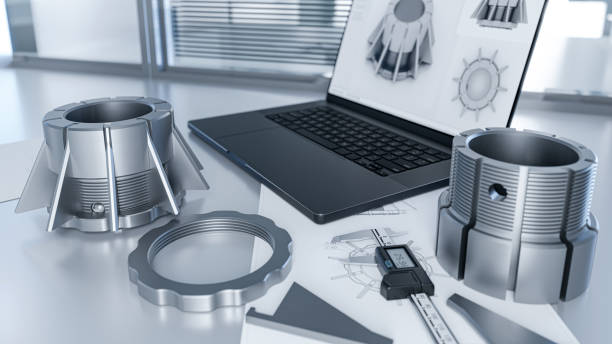
Application of CNC machining aluminum
Aluminum alloys have several advantageous features. As a result, CNC-machined aluminum parts are indispensable in a variety of industries, including the following:
- Automotive: Similar to the aerospace industry, various parts in the automotive industry, such as shafts and other components.
- Aerospace: Several airplane fittings due to their high strength-to-weight ratio.
- Electrical: CNC machined aluminum parts with strong electrical conductivities are frequently used as electronic components in electrical equipment.
- Sports: Aluminum CNC service are also used in the sports industry. They are frequently used to manufacture sports equipment such as baseball bats and sports whistles.
- Food/Pharmaceutical: Aluminum parts are significant in the food and pharmaceutical industries because they do not react with most organic compounds.
Best Practices For Aluminium CNC Manufacturing Techniques
Because of its excellent machinability and strength-to-weight ratio, aluminum is a popular metal for CNC machining. This machinability results in shorter machining times, which lowers labour and machine time costs. It also makes machining aluminium to the finer tolerances necessary for precision items easier.
However, the high coefficient of thermal expansion of aluminium might jeopardise tolerances if the workpiece becomes too hot during milling, particularly for thin parts. To avoid any bad impacts, create toolpaths that do not dwell on one location for too long. This technology allows heat to drain, enabling examination and adjustment to the tool paths in the CAM software during the CNC machining program.
If the forces are too great, the softness of some aluminum alloys allows for deformation during machining. So, to generate the proper amount of force during machining, use the recommended feeds and speeds for your specific grade of aluminum. Another rule of thumb for preventing deformation is to keep the thickness of your part more than 0.020 inches in all locations.
Another impact of aluminum’s malleability is forming a material-built-up edge on the cutting tool. This obscures the tool’s sharp cutting surface, dulls it, and lowers its cutting ability. The part’s surface finish suffers as a result of the built-up edge. try different cutting tool materials to prevent a built-up edge; use carbide inserts instead of HSS (high-speed steel).
Maximize Precision and Efficiency with Aluminum CNC Machining
At ZCprecision, we specialize in precision CNC machining of aluminum, offering a wide range of services including milling, turning, and routing. Our state-of-the-art facilities such as Hermle 5-axis CNC milling centers and expert team ensure that your parts meet the highest standards of quality and precision.
Ready to transform your design into a high-performance component? Contact ZCprecision today for a free consultation and quote. Let’s work together to achieve excellence in your manufacturing endeavors. Your vision, our expertise – let’s build something great!
Conclusion
Aluminum stands as a premier material in CNC machining due to its unique blend of mechanical properties and manufacturing versatility. Its exceptional corrosion resistance, high strength-to-weight ratio, and superior electrical conductivity make it indispensable across industries—from aerospace components demanding lightweight durability to automotive parts requiring precision and from electronic enclosures needing thermal management to medical devices requiring biocompatibility. The range of aluminum alloys, such as the versatile 6061, the high-strength 7075, and the corrosion-resistant 5056, offers tailored solutions for every application, while processes like milling, turning, and drilling ensure precision across complex geometries.
However, mastering aluminum machining requires addressing challenges like tool wear, workpiece deformation, and chip adhesion—challenges that can be overcome through optimized workholding, advanced tooling, and strategic cooling techniques. Surface treatments like anodizing and powder coating further enhance its performance and aesthetic appeal, expanding its utility in both functional and decorative applications.


